 Updates
UA Museum to Safeguard Stampede Trail Bus
Corrie A. Feige
Commissioner
Department of Natural Resources
State of Alaska
DNR to pursue safeguarding Stampede Trail bus at UA Museum
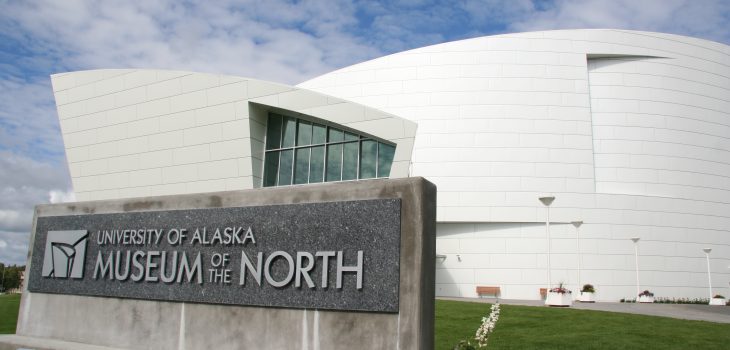
(Fairbanks, AK) – The Department of Natural Resources (DNR) intends to negotiate with the University of Alaska’s Museum of the North as the likely repository of the well-known historic “Bus 142,” removed from the Stampede Trail last month.
“Of the many expressions of interest in the bus, the proposal from the UA Museum of the North best met the conditions we at DNR had established to ensure this historical and cultural object will be preserved in a safe location where the public could experience it fully, yet safely and respectfully, and without the specter of profiteering,” DNR Commissioner Corri Feige said today.
The bus became well-known after Jon Krakauer’s 1996 book “Into the Wild” and a 2007 movie with the same name popularized the story of 24-year-old wanderer Chris McCandless, who sadly died there alone in 1992 after a 114-day stay at the site, about 25 miles west of Healy.
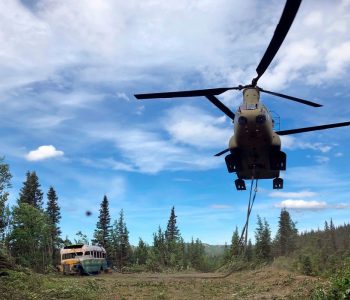
Over the years unprepared travelers to the bus sometimes became lost or injured, requiring the assistance of local search and rescue teams; two travelers died in their attempts to reach the bus, in separate incidents in 2010 and 2019. Seeking to reduce the risk of future tragedies, DNR asked the Alaska Army National Guard for help, and on June 18 the Guard helicoptered the bus away from the site. DNR has since kept the bus in a secure but undisclosed location while considering options for its long-term disposition.
As the bus was abandoned on general state land, DNR is responsible for its disposal, and has received dozens of suggestions and offers from museums, institutions and individuals across the state and nation who had a variety of plans to preserve, exhibit, monetize, or memorialize it, Feige said.
After careful consideration, DNR decided to entertain the UA Museum’s proposal, which fully met the departments’ requirements that any long-term disposition must enhance public safety, minimize financial impact the state, be legally defensible, and be respectful to the families that lost loved ones in connection with the bus.
The UA Museum of the North proposal has several advantages, Feige said: It is one of just three official state repositories, and the only one in the Interior able to accept and curate state-owned historical items (and the only one in the Interior); it has experts on staff who can help restore, curate and display the bus; it can legally accept non-profit donations to pay for the costs of the bus; and it would allow DNR to retain legal ownership of the bus and play an active role in its use, including whether and to whom to lend it out for display elsewhere.
Feige said her department understands the bus has played an important role in many Interior lives over the decades: moving Fairbanks residents around their city in the Fifties; housing mining road construction crews in the early Sixties; sheltering hunters and adventurers in the Seventies and Eighties; then becoming a destination for adventure seekers and fans of the “Into the Wild” book and movie since 1992.
“I believe that giving Bus 142 a long-term home in Fairbanks at the UA Museum of the North can help preserve and tell the stories of all these people,” Feige said. “It can honor all of the lives and dreams, as well as the deaths and sorrows associated with the bus, and do so with respect and dignity. I appreciate the Museum coming forward with its proposal, and look forward to working with them on a final agreement.”
DNR and the museum will develop a Memorandum of Understanding (MOU) laying out the points of agreement, and anticipate the final MOU will be signed sometime in the next few months.
For additional information on the bus disposition process, including DNR analysis, the Museum’s proposal, the final MOU and other related documents, go to:
www.dnr.alaska.gov/mlw/news/bus-142/